Satellite Bracket
Flight-qualified mounting bracket for CubeSat payloads. Designed for space environment with thermal cycling considerations.
86g
mass
-40°C to +85°C
tempRange
3.2
FoS
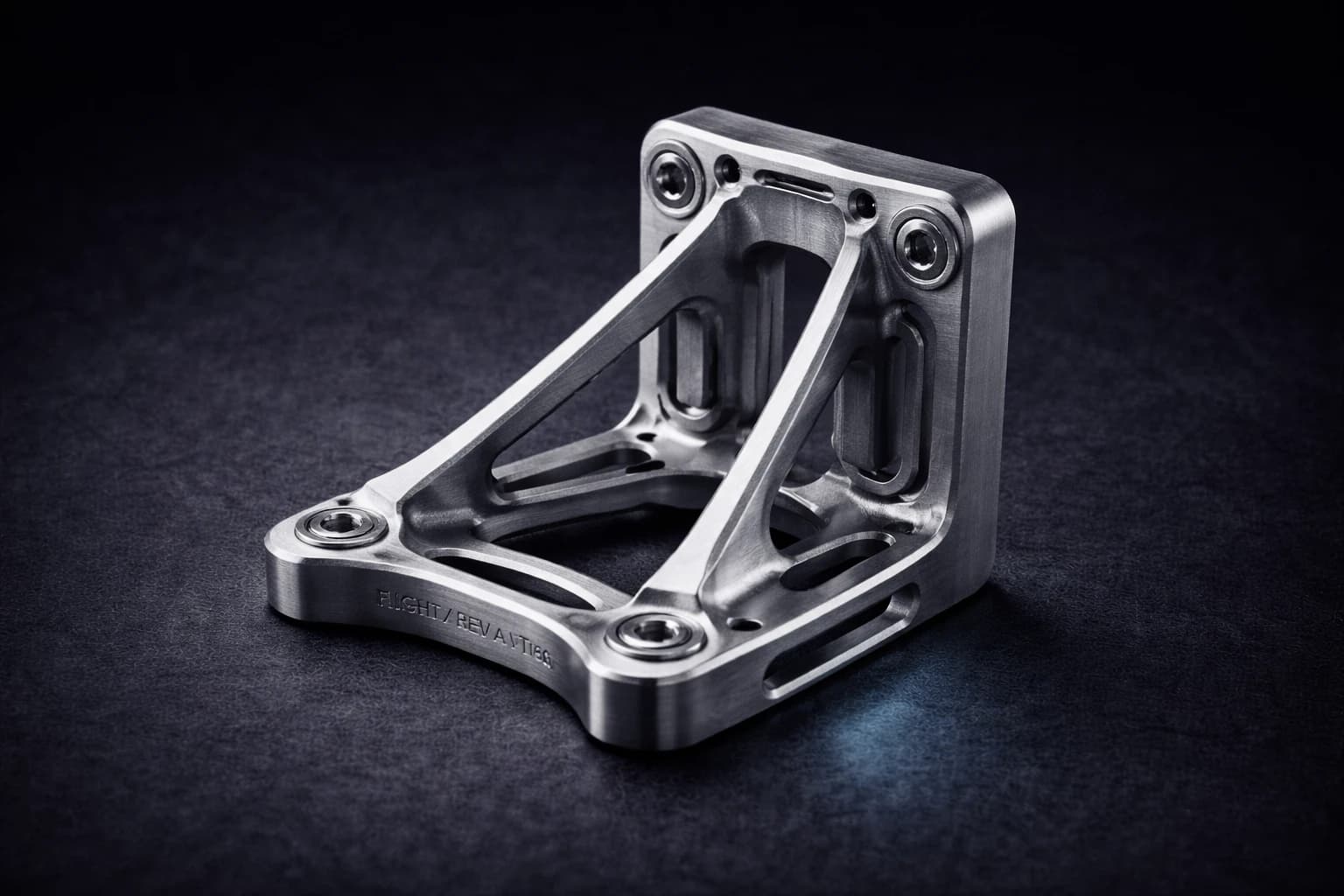
PROBLEM
A university CubeSat team needed a payload mounting bracket that could survive launch vibration, thermal cycling in LEO, and maintain alignment of an optical sensor to within 0.1 degrees. Mass budget was 120g maximum. The bracket had to be manufactured with university-accessible CNC equipment.
APPROACH
Modeled the bracket within the CubeSat rail and payload volume constraints. Thermal expansion matching between the aluminum bracket and the optical sensor's titanium housing drove material selection. Topology optimization under combined quasi-static launch loads (12g axial, 6g lateral per NASA GEVS) and thermal gradient loads.
SIMULATION
Random vibration analysis per NASA GEVS (14.1 Grms). Quasi-static launch load analysis at limit and ultimate levels. Thermal cycling FEA from -40°C to +85°C (1000 cycles, LEO thermal environment). Thermo-elastic deformation analysis to verify optical alignment budget. Modal analysis to confirm no coupling with launch vehicle modes.
RESULTS
86g final mass, 28% under budget. Factor of safety 3.2 at ultimate load. Optical sensor alignment maintained within 0.04 degrees through full thermal range, well within the 0.1 degree requirement. First natural frequency at 340 Hz, above the 100 Hz launch vehicle requirement. Design cleared for flight review.
SPECIFICATIONS
NEED SOMETHING LIKE THIS?
We design, simulate, and validate. Tell us what you're building.
Get a Quote